Past events
    Completed event

    August 25 at Hacker Dojo: Freight AI, Vachi, and Quantum Security

    August 25, 2026Hacker Dojo, Mountain View
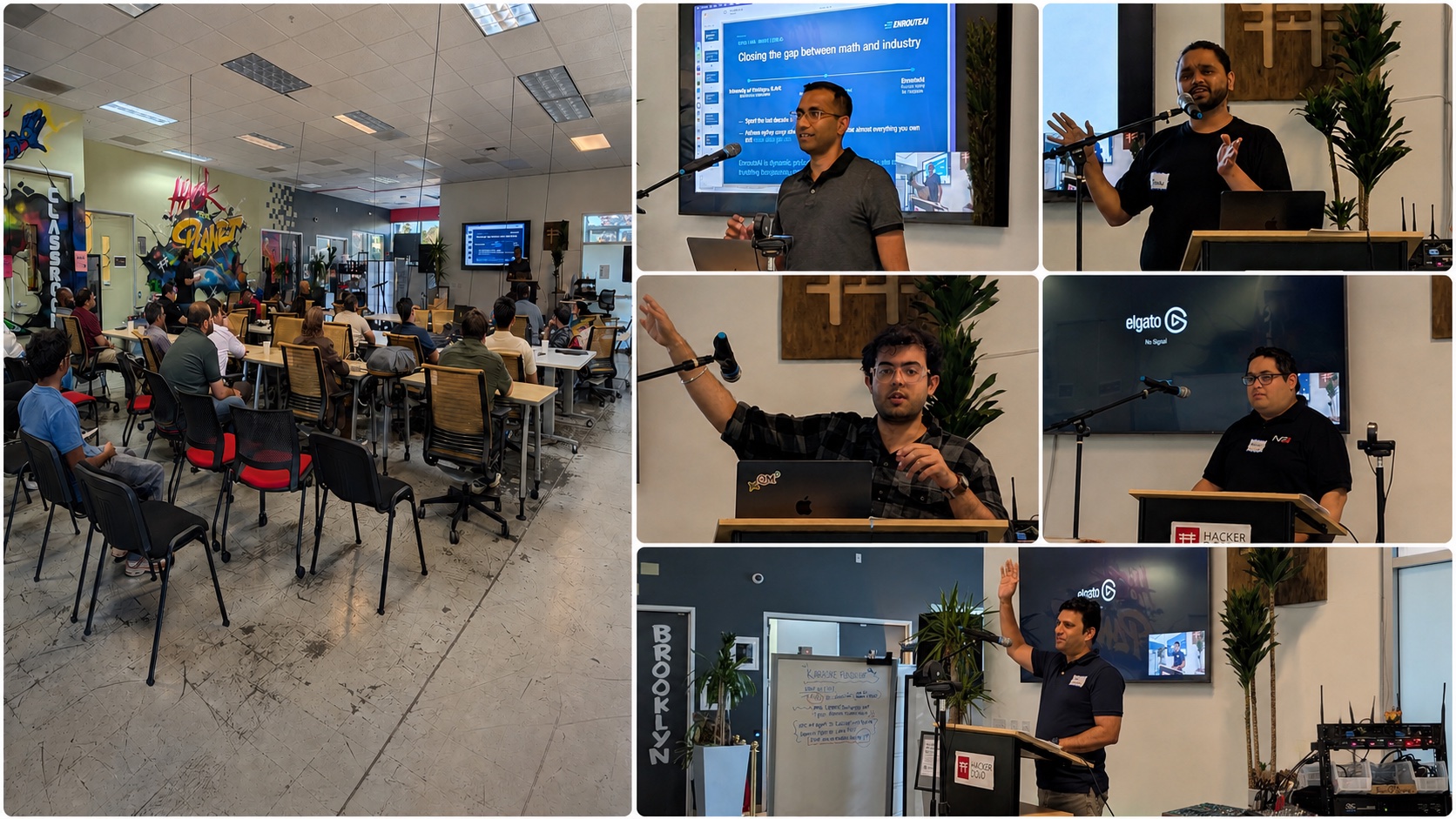
    Collage of the StartupA2Z founder presentations and audience pitches at Hacker Dojo on August 25, 2026Stories & demos

    What happened

    The event at a glance

    StartupA2Z's August 25 Founders Pitch & Mix brought Bay Area builders together for founder stories, live product demonstrations, direct feedback, and networking. Neil Fernandes explained how EnrouteAI moved operations-research thinking into a practical freight-pricing workflow. Achal Pandey shared the harder lesson behind Vachi: traction can be real and still not justify continuing on the same path. Ridham Bhagat demonstrated how Quip Network adds post-quantum protection to an existing blockchain wallet workflow.

    Founder stories grounded in real operating problems
    Live startup and product demonstrations
    Audience questions and direct founder feedback
    Bay Area founder and builder networking

    The StartupA2Z difference

    Founder stories and product demos

    These stories are drawn from the presentations, session photos, and supporting public sources. They capture the problem each team brought into the room, the approach they demonstrated, and the lesson another builder can apply.

    Source: PresenterPrep

    The problem

    • Inconsistent shipper RFP (Request for Proposal) spreadsheets
    • Hundreds of lanes priced under deadline
    • Pricing inputs scattered across tools

    What Neil demonstrated

    • Upload the bid file as received
    • Validate lanes before pricing
    • Export in the shipper’s original format

    Founder takeaway

    • Fit into the customer’s existing workflow
    • Automate the slowest, most error-prone work
    Read the full Founder’s Playbook
    Source: PresenterPrep

    The problem

    • People carry unfinished tasks and ideas across disconnected tools.
    • Capturing intent is easy; turning it into dependable follow-through is harder.
    • Early user interest did not automatically resolve the long-term product direction.

    What they demonstrated

    • Interview small-business users
    • Validate the mental-load problem
    • Build a voice-first brain-dump experience

    Founder takeaway

    • Separate usage from conviction
    • Revisit the thesis
    Read the full Founder’s Playbook

    Technical demo 03 · Quip Network

    Protecting today’s blockchain wallets from future quantum attacks

    Ridham Bhagat · Technical presenter

    Source: PresenterPrep

    The problem

    • Today’s blockchain wallets depend on signatures that are not post-quantum secure.
    • A capable quantum attacker could forge authorization and move another user’s funds.
    • Post-quantum signature schemes are still evolving, so a permanent verifier creates migration risk.

    What they demonstrated

    • Hold funds in an on-chain contract
    • Send the proposed signature to a verifier
    • Release funds only after verification

    Technical take

    • Separate funds from keys
    • Build replaceable trust
    Read the full Founder’s Playbook

    Founder pitch 04 · FraudFront

    FraudFront

    Alex Gong

    Layered protection for older adults against online fraud, backed by behavioral monitoring and a trusted network.

    Source: PresenterPrep

    Founder pitch 05 · Kalakar

    Kalakar

    A professional and commerce platform where artists can build profiles, collaborate, teach, and sell.

    Source: PresenterPrep

    Community stage

    Audience pitches

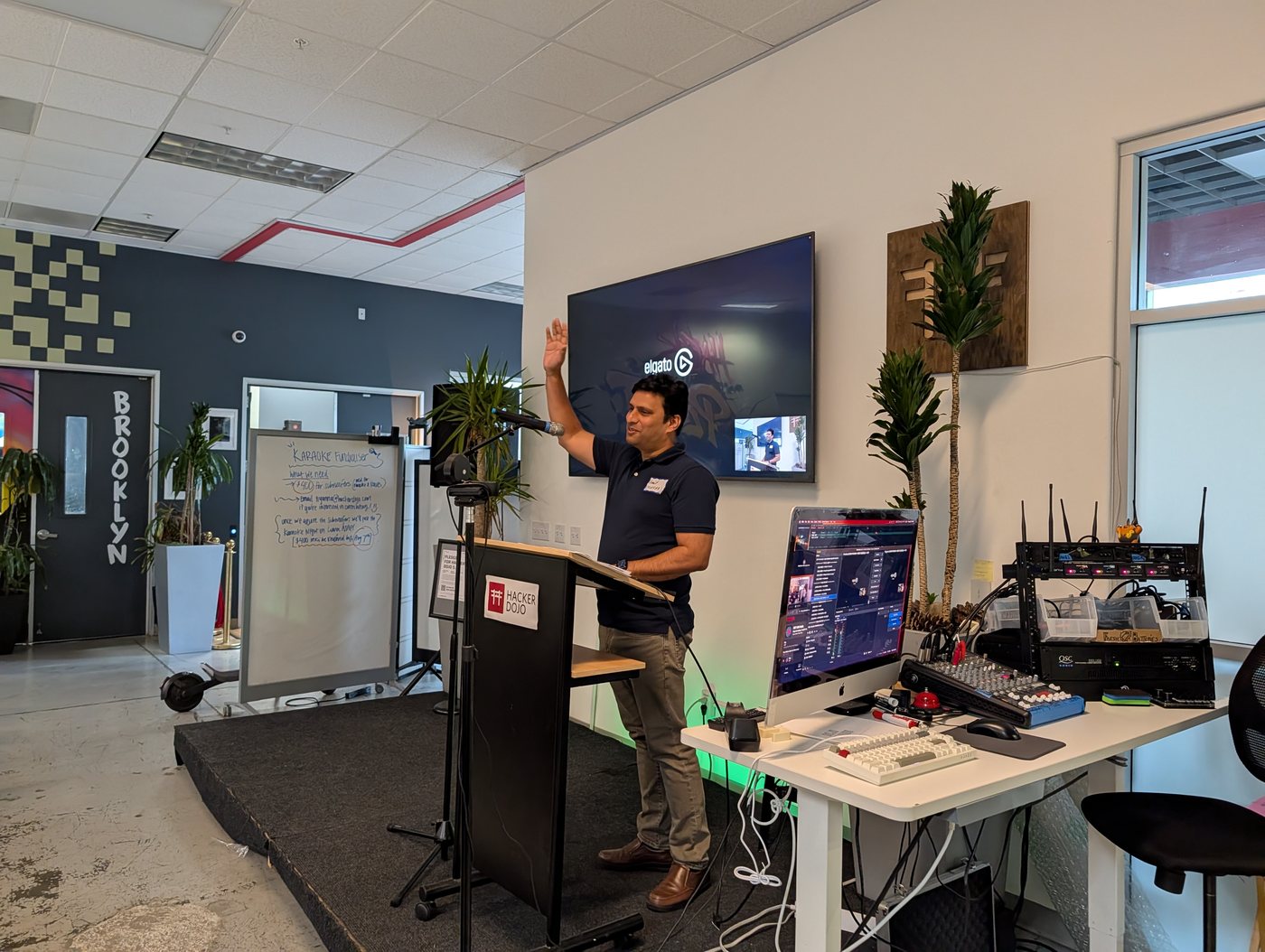
    An audience speaker sharing a pitch during the StartupA2Z event at Hacker Dojo
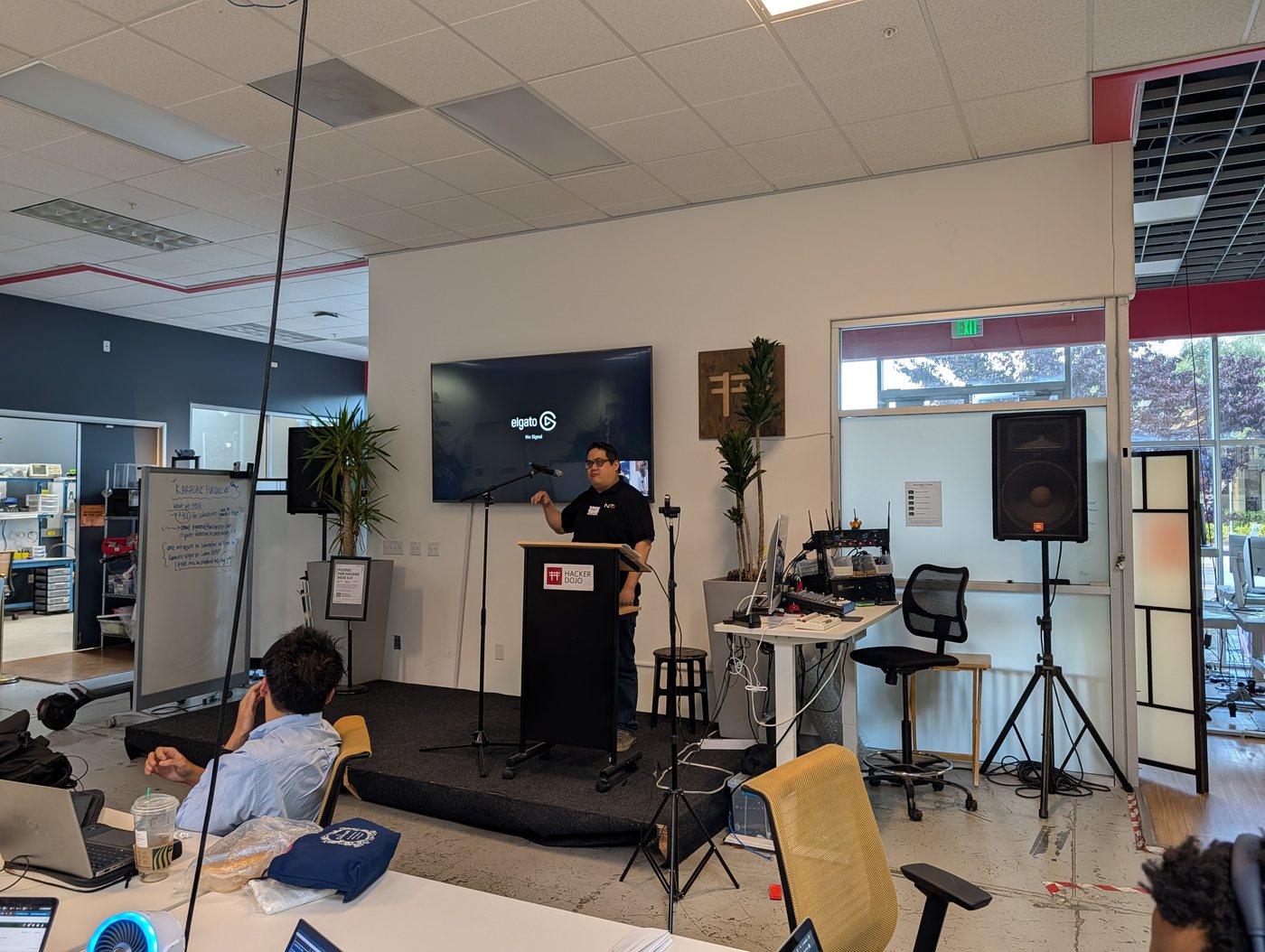
    Another audience speaker presenting an idea during the StartupA2Z event at Hacker Dojo

    Key lessons

    What founders should remember

    • Start with a recurring problem whose current workaround is visibly expensive or slow.
    • Fit into the customer's real workflow before asking the customer to change it.
    • Use product experiments to test the business thesis, not only feature demand.
    • Traction is evidence, but it does not automatically prove the current direction is right.
    • Reduce adoption friction by strengthening the tools customers already use.
    • Founder communities become useful when builders share the decisions behind the product, including when they stop or change course.