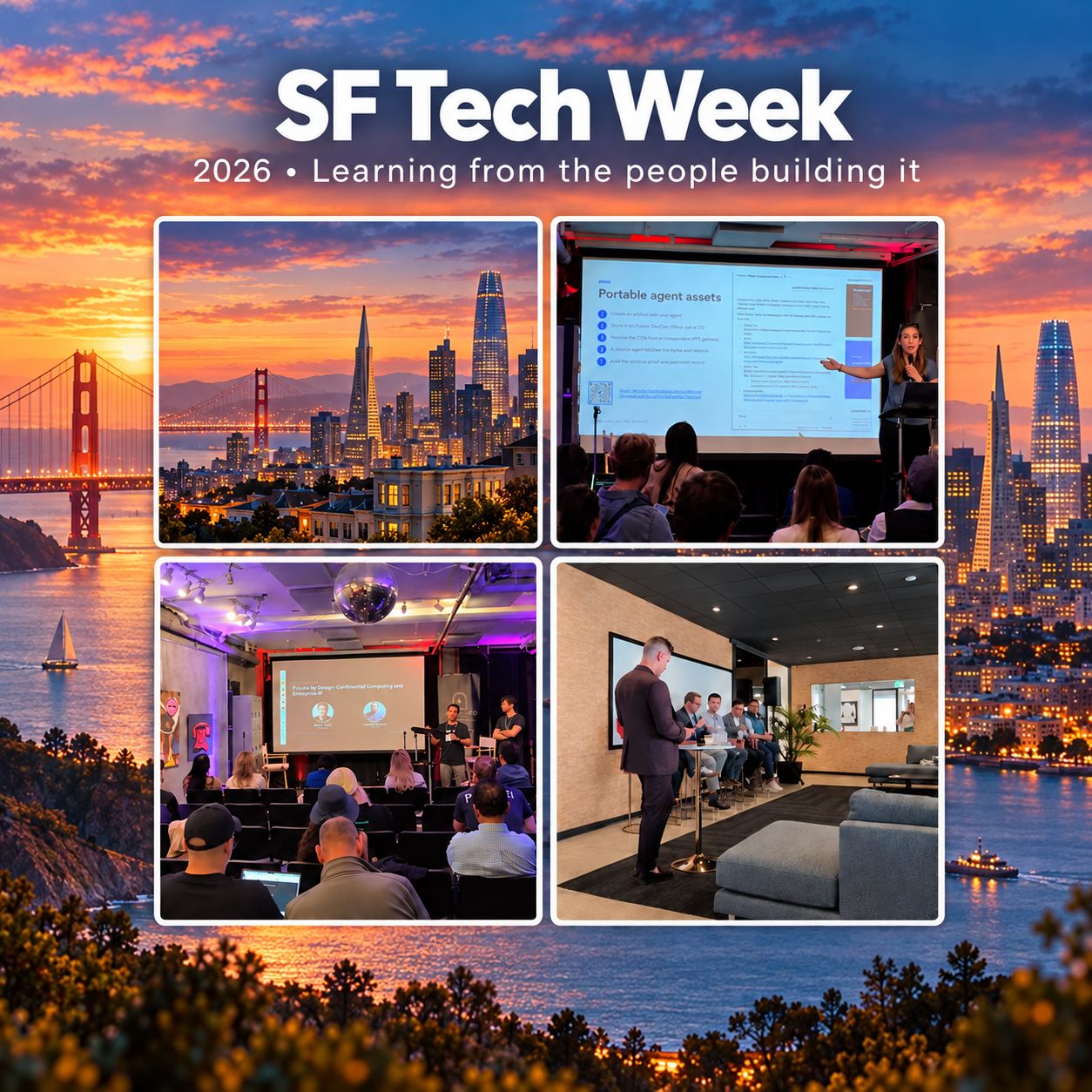
The shift
In-person conversations changed the quality of the questions
Much of our outreach and learning happens through cold calls, email, LinkedIn, and video. SF Tech Week added something those channels cannot fully reproduce: the ability to hear how founders describe the problem while they are still working through it.
Spend more time listening before offering a solution.
The most useful questions became: What is the team struggling with? What have they already tried? What is still getting in the way? The six themes below turn that listening into a repeatable founder framework.
Six recurring themes
What founders should examine before they scale
Reliable AI needs evaluation, not confidence alone
Several conversations focused on testing AI systems and determining whether their results are dependable.
Question to take back
What evidence tells us this system works well enough for the customer's actual workflow?
Sovereign AI is ultimately about control
Molly Mackinlay's session brought data ownership, infrastructure control, portability, and confidential processing into one founder-level discussion.
Question to take back
Can we export our data, context, and work in a usable form if we change providers?
Context and memory create value—and responsibility
What an AI system remembers, retains, and carries between tools affects product usefulness, privacy, and customer trust.
Question to take back
What should the product remember, for how long, and who can inspect or delete it?
Agent security has to match agent authority
Sessions involving Auth0 at Okta, Google for Startups, and Wiz added practical perspectives on identity, access, AI, and cloud security.
Question to take back
What can the agent access, what can it change, and how quickly can that authority be revoked?
Customer understanding comes before scale
Sessions at Reddit, Tonik, and Sell & Scale reinforced the value of community listening, honest brand feedback, and understanding how customers buy.
Question to take back
What is the customer struggling with, what have they tried, and what is still getting in the way?
Growth requires documented and financial discipline
The Series A discussion at Expensify and Financial Systems for Founders connected signed commitments, runway, cash timing, and scenario planning.
Question to take back
What milestone does our current cash buy, and are the commitments behind the plan documented?
Founder decision matrix
Turn the themes into operating questions
Use this matrix in a founder meeting, product review, or planning session. It is designed to expose the next unanswered question, not produce a perfect score.
| Decision area | Question | Evidence to look for | First move |
|---|---|---|---|
| AI quality | How will we evaluate reliability? | A repeatable test tied to a customer workflow | Define one critical task and its pass criteria |
| Data control | Can customers take their data and context with them? | Documented export, retention, and deletion paths | Map what remains when a customer leaves |
| Agent security | What authority does the agent have? | Scoped permissions, observable actions, and revocation | List every system the agent can read or change |
| Customer fit | What problem is urgent enough to change behavior? | Evidence from direct conversations and actual attempts | Interview five customers before adding another feature |
| Brand and community | Can people explain the value after hearing it once? | Clear language confirmed by honest external feedback | Ask three outsiders to repeat the promise back |
| Financial readiness | What milestone will this spending reach? | Base, upside, and downside plans tied to runway | Calculate the runway impact of the next decision |
| Fundraising readiness | Are important commitments complete and signed? | Organized records with clear owners and final versions | Audit material agreements before diligence starts |
The week at a glance
Where each theme surfaced
| Lens | Conversation or session | What it clarified |
|---|---|---|
| AI assurance | AI evaluation conversations | Trust needs measurable evidence |
| Sovereign infrastructure | Open Source × Sovereign AI | Ownership includes data, context, infrastructure, and portability |
| Secure agents | Build AI Agents with Auth0 at Okta | Authority and identity must be designed together |
| Cloud and AI security | Google for Startups and Wiz | Customer trust depends on how the product operates, not only what it produces |
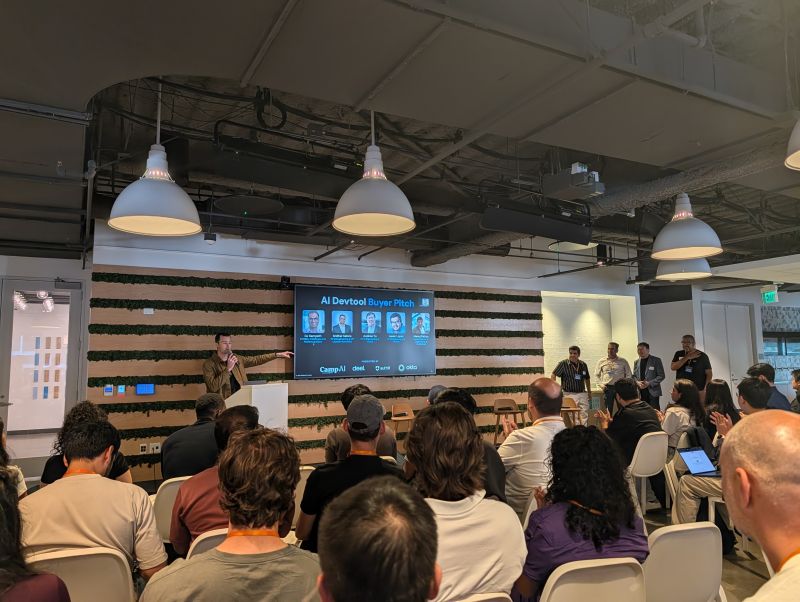
| Brand and customer understanding | Reddit, Tonik, and Sell & Scale | Listening and positioning shape whether a product is understood |
| Growth readiness | Series A panel and Financial Systems for Founders | Documentation, cash discipline, and milestones support durable growth |
A practical 30-day follow-through
Convert event learning into company evidence
Week 1
Listen
Interview customers using the three questions: struggle, prior attempts, remaining obstacle.
Week 2
Map
Document AI data, memory, permissions, financial runway, and unsigned commitments.
Weeks 3–4
Prove
Complete one evaluation, one permission review, and one customer-facing explanation.
The lasting takeaway
Founders do not need more generic advice. They need better questions tied to the decision in front of them. The value of attending SF Tech Week was not collecting more topics—it was understanding where those topics collide inside a real company.