01 · The problem
Who is excluded by the current cost of computing?
Meaningful technology education often assumes access to expensive laptops, laboratories, and finished applications.
- Hands-on technology education often assumes access to expensive laptops and laboratories.
- Finished consumer devices can hide how computing works from the learner.
- Cost and complexity prevent many children from experimenting directly with hardware.
02 · The solution
Reduce the computer to an affordable, open platform built for experimentation.
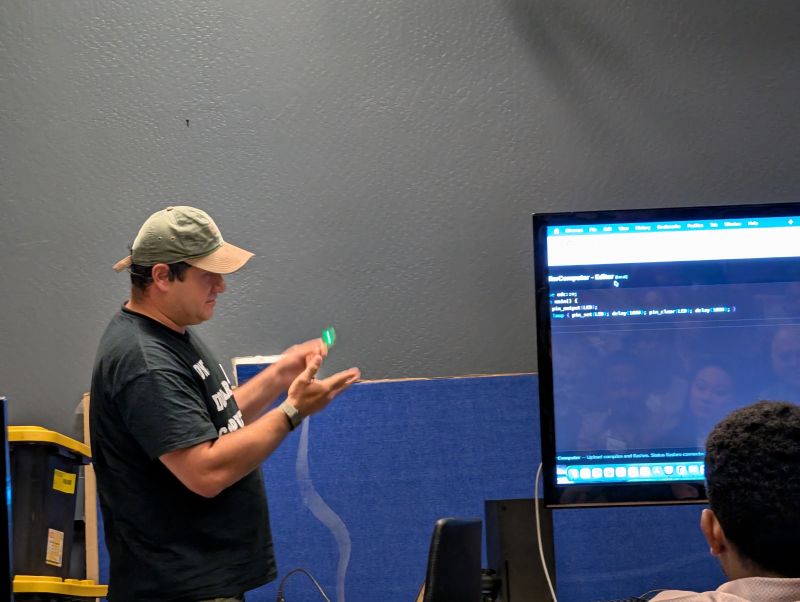
ClaudIO demonstrated an open-source, RISC-V-based computer designed to cost about one dollar and help students learn how computers work by experimenting directly with the hardware.
03 · What was demonstrated
A low-cost path into hands-on computing
The talk broke the approach into a practical sequence:
- 1Use an open RISC-V foundation
- 2Remove unnecessary hardware cost
- 3Expose the computer as a learning system
- 4Let students experiment directly
04 · The founder take
Accessibility can be the product requirement
Start with people excluded by the current solution, remove unnecessary complexity, and design for accessibility from the beginning.
Start with the excluded user
Design around people the existing solution cannot economically serve.
Remove hidden assumptions
Question which features and costs are actually required for the learning outcome.
Make learning tangible
Direct experimentation can teach more than another finished application.
05 · Continue exploring