01 · The problem
Why is deploying AI models on FPGAs still difficult?
Deploying machine-learning models on specialized hardware can take months and traditionally requires deep knowledge of chip design, hardware languages, and optimization tools.
- Machine-learning engineers and chip-design teams work with different tools and abstractions.
- FPGA deployment can require hardware languages, scheduling, mapping, and specialized optimization.
- The expertise gap can turn deployment into a months-long engineering project.
02 · The solution
Translate familiar model formats into FPGA implementations automatically.
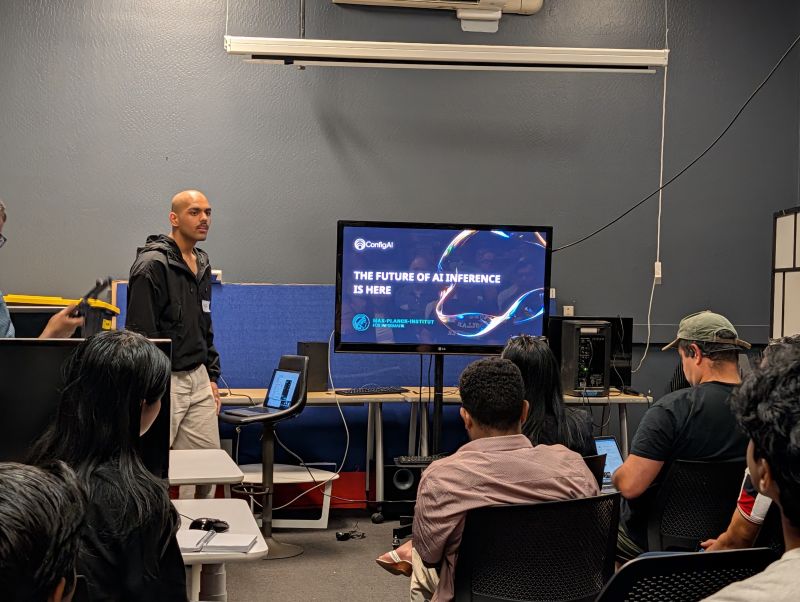
ConfigAI is building a compiler that accepts familiar model formats such as ONNX, PyTorch, and Keras, then automates mapping, scheduling, and FPGA hardware generation.
03 · What was demonstrated
A compiler between ML models and specialized hardware
The talk broke the approach into a practical sequence:
- 1Accept a familiar model format
- 2Analyze the model and hardware target
- 3Automate mapping and scheduling
- 4Generate the FPGA implementation
04 · The founder take
Hide specialized complexity without hiding control
The larger opportunity is to make advanced hardware usable by machine-learning engineers without requiring every engineer to become a chip-design specialist. The team's stated goal is to reduce deployment work from months to minutes.
Meet developers where they work
Support the model formats and workflows engineers already understand.
Automate the expertise bottleneck
The opportunity sits where scarce specialists slow down otherwise capable teams.
Make advanced hardware usable
A strong developer tool expands access without forcing every user to become a chip expert.
05 · Continue exploring