Past events
    Completed event

    September 15 at Hacker Dojo: From Startup Story to Business Fundamentals

    September 15, 2026Hacker Dojo, Mountain View
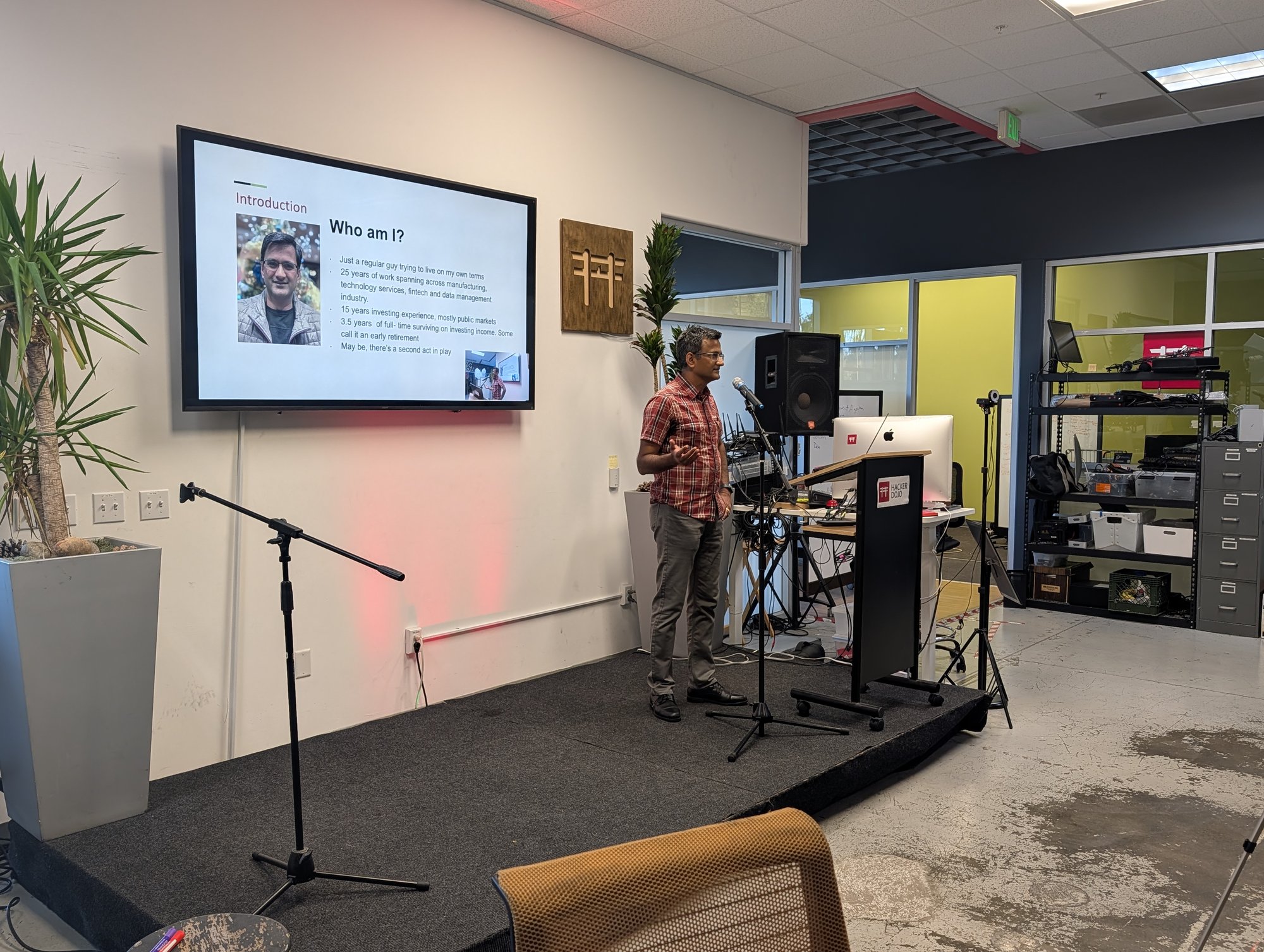
    The September 15 masterclass speaker presenting beside an introductory slide at Hacker DojoRead masterclass recap

    What happened

    The event at a glance

    What Raises Your Seed Round Will Sink Your Series C was the premise of Vivek Somani’s September 15 masterclass. Through Business Lifecycle Economics and audience questions, he explored how a company’s story, operating metrics, funding choices, and leadership must evolve together. The session focused on fundamentals rather than founder pitches.

    Map the business lifecycle from idea to growth and maturity
    Understand the shift from narrative to measurable performance
    Discuss capital choices, bootstrapping, and investor expectations
    Apply the framework to public-company examples and audience questions

    Masterclass recap

    The business changes. The founder’s decisions must change too.

    Vivek’s framework connected four decisions: how to explain the opportunity, which numbers to track, what capital to raise, and how to lead. These are the main lessons from the session.

    The September 15 masterclass speaker presenting beside an introductory slide at Hacker Dojo
    The September 15 masterclass speaker presenting beside an introductory slide at Hacker Dojo

    01 · Know your stage

    A compelling story needs increasing proof

    Vivek described a progression from an idea to a product, a working business model, and scalable growth. Early conversations emphasize the problem and market opportunity; later ones need evidence that customers adopt, pay for, and keep using the product.

    He cautioned against treating funding-round labels as rigid boundaries. The underlying business matters more than the letter attached to its latest raise.
    Transcript: 20:57–28:16 · 37:34–45:25 · 1:07:04
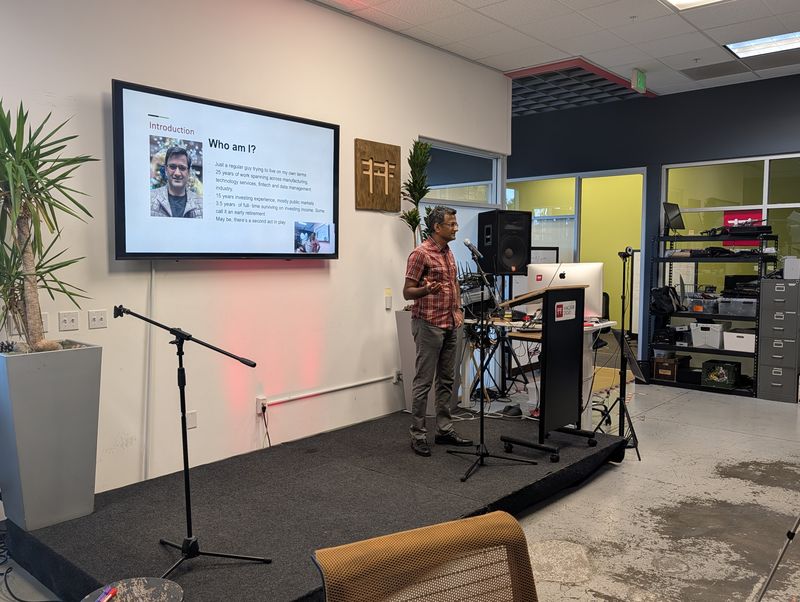
    A wide view of founders listening to the September 15 masterclass at Hacker Dojo
    A wide view of founders listening to the September 15 masterclass at Hacker Dojo

    02 · Measure the business

    Growth needs retention and unit economics

    As a company scales, Vivek shifted the discussion toward customer acquisition cost, lifetime value, retention, and unit economics. More sales alone do not resolve a loss on each transaction.

    As businesses mature, margins, cash generation, and returns on invested capital become more prominent. His point was to understand these measures early, then use the ones that explain the company’s current stage.

    Transcript: 44:53–50:40
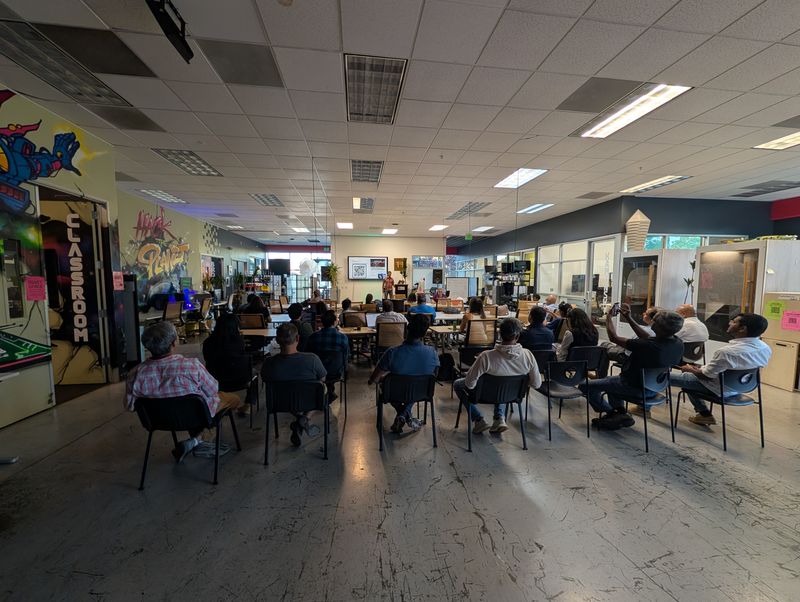
    Attendees facing the stage during StartupA2Z’s Seed to Series C masterclass
    Attendees facing the stage during StartupA2Z’s Seed to Series C masterclass

    03 · Choose capital deliberately

    Funding should fit the company you want to build

    Audience questions explored bootstrapping, control, and external investment. Vivek framed the choice around the opportunity and the founder’s goals: outside capital can accelerate growth, but also brings expectations and constraints.

    He discussed both underfunding a promising business and raising more than it needs. On debt, he emphasized the obligation to service payments even when future revenue is uncertain.

    Transcript: 49:16–55:23 · 1:04:08–1:06:06
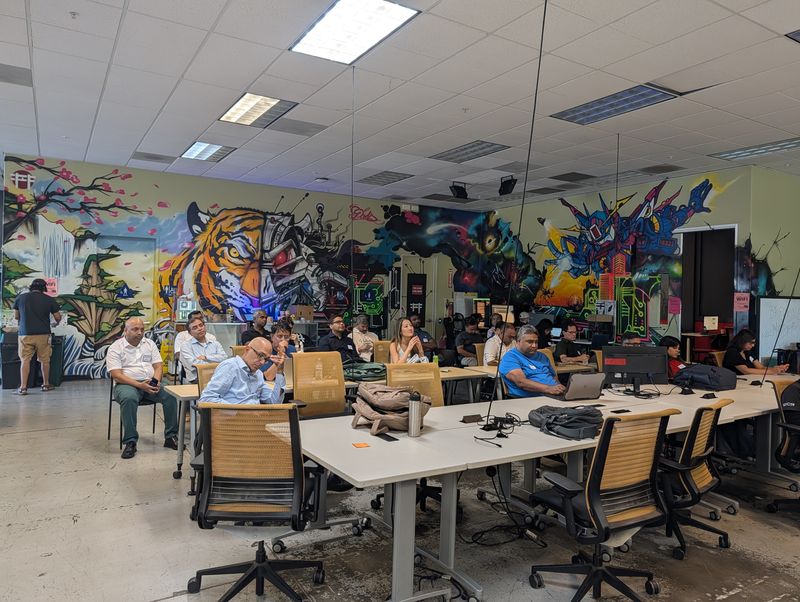
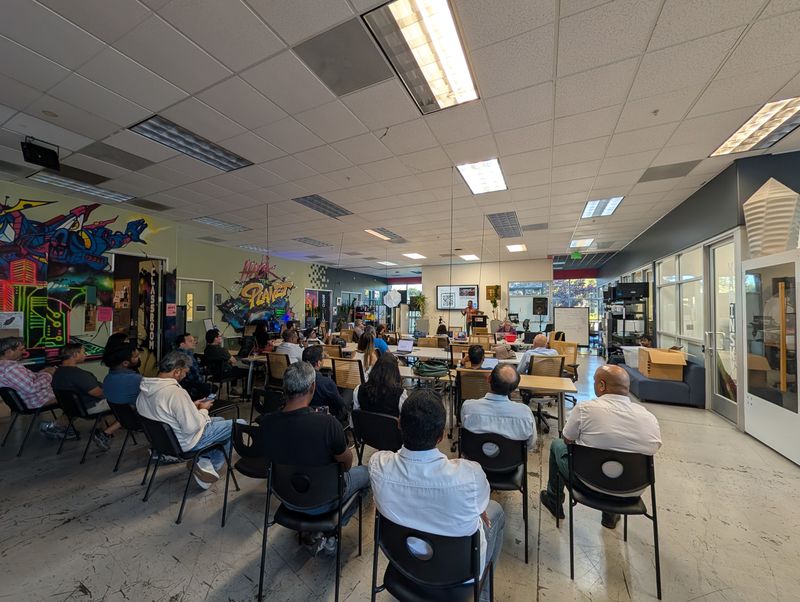
    The StartupA2Z audience seated beside Hacker Dojo’s mural during the September 15 session
    The StartupA2Z audience seated beside Hacker Dojo’s mural during the September 15 session

    04 · Evolve the leadership

    Build, scale, and defend require different strengths

    The discussion moved from a founder’s vision to building an organization and defending a mature business. Leadership responsibilities and specialist hires change as the company grows.

    In the closing company exercise, Vivek asked participants to look beyond age or public-listing status. Growth, profitability, capital discipline, balance-sheet strength, and competitive advantages help explain how a business actually behaves.

    Transcript: 55:23–1:03:15 · 1:10:41–1:36:12

    Key lessons

    What founders should remember

    • Match the fundraising narrative to the evidence the business can support.
    • Understand retention and unit economics before relying on scale.
    • Choose investors and capital that fit the growth plan.
    • Adapt leadership as the company’s needs change.